How Do You Make the World Care About a Machine That Feels Like Magic?
What I learned about marketing vacuum cooling after spending two years inside the technology.
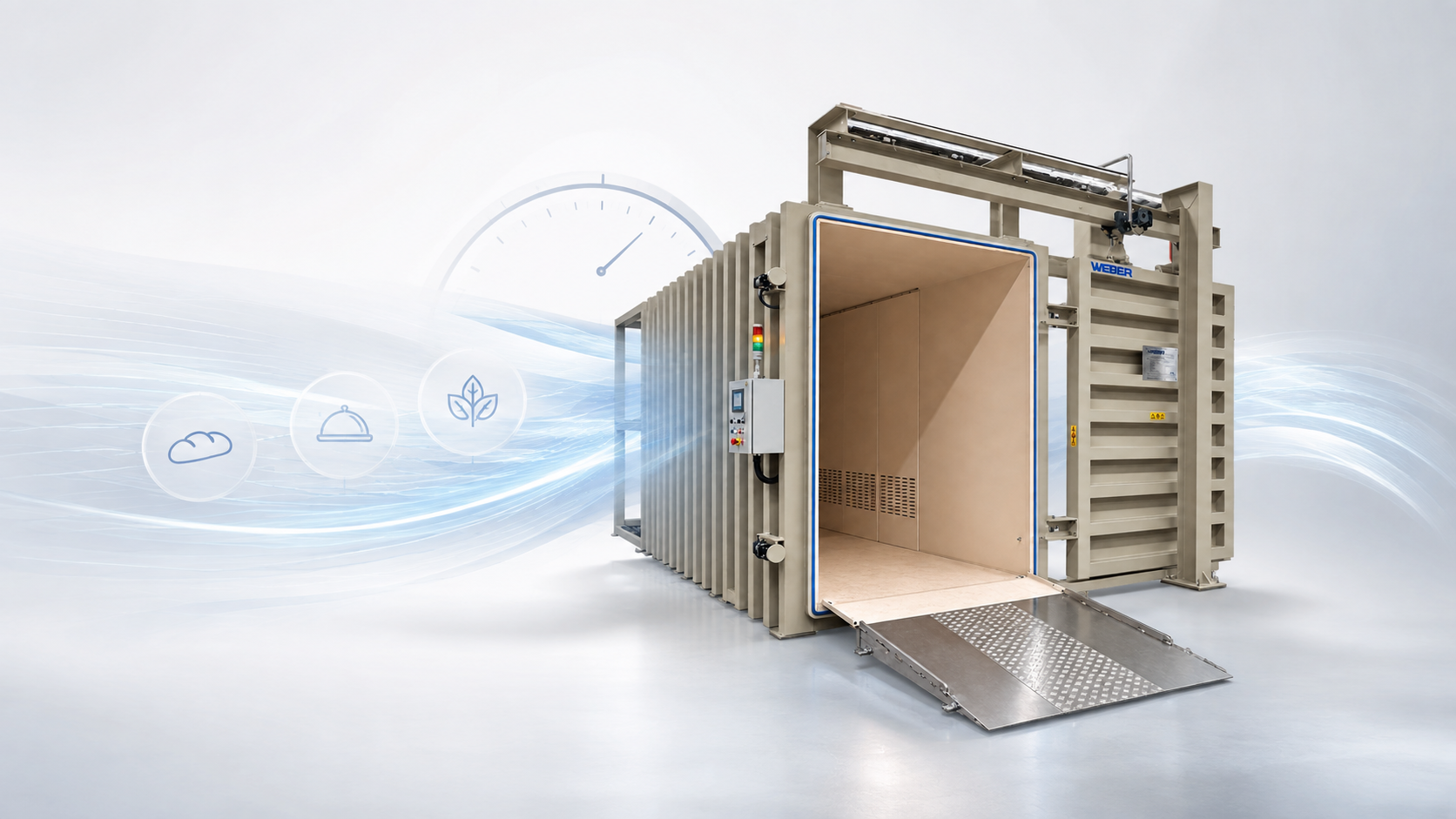
Two years ago, when I joined Weber Vacuum Group in Sales & Marketing, I knew very little about vacuum cooling. Then I saw the technology working. And my first reaction was basically: how is this not much bigger?
In bakery, cooling time can be reduced by around 95%.
In food catering, faster cooling can mean longer shelf life, lower labour requirements and a much more efficient production process.
For flowers and fresh produce, rapid cooling can increase throughput and help producers move more product through the same operation.
Different industries. Different problems.
But the same machine creates a very visible before-and-after.
That is what makes vacuum cooling fascinating to me. It almost feels like magic.
But here is the marketing problem.
Great technology does not automatically create a great category. You can have a machine that dramatically changes a production process and still remain relatively unknown outside a small group of industry specialists.
So if the technology is this good, the more interesting question becomes:
How do you make the world care?
The traditional industrial marketing playbook is predictable.
Go to trade shows. Build distributor networks. Run Google Ads. Publish technical brochures. Organise webinars. Send salespeople after leads.
All of these can work.
But I don't think doing more of them is the real answer.
If I were thinking about vacuum cooling through a category-design lens, I would start somewhere else.
Stop marketing the machine.
Most customers don't wake up thinking: "We need a vacuum cooler."
They wake up thinking: "Our cooling process takes too long." "We need more production capacity." "We're losing shelf life." "Labour is expensive." "Our factory can't produce more without adding another line."
That is a completely different conversation.
The opportunity isn't necessarily to become louder than every other equipment manufacturer. It is to define the problem better than everyone else.
Instead of selling vacuum cooling technology, perhaps the bigger conversation is about what slow cooling is costing the food industry.
Time. Space. Energy. Labour. Shelf life. Production capacity.
Once the customer understands the cost of the old way, the technology becomes much easier to understand.
Trade shows are useful. But they shouldn't be the strategy.
I have spent a lot of time around international trade shows. They are valuable because you meet the market in one place. You speak with customers, distributors, technical people and competitors.
But there is an obvious limitation.
The conversation lasts four days. Then everyone goes home.
A global company shouldn't have to wait for the next exhibition to educate the market. The trade show should create content for the next six months.
Show the machine. Film the process. Interview customers. Compare traditional cooling with vacuum cooling. Take one real production problem and explain it properly.
Then distribute that story through LinkedIn, YouTube, webinars, industry media, sales teams, distributors and search.
One demonstration can become fifty conversations.
That is much more interesting to me than simply building a bigger booth.
I would be aggressive. Just not in the traditional way.
Aggressive marketing doesn't have to mean sending thousands of cold emails or increasing the advertising budget. It can mean being aggressive with the point of view.
For example:
Why should a bakery accept a 90-minute cooling process if it can potentially be done in minutes?
Why should a producer invest in another production line before understanding whether cooling is actually the bottleneck?
Why do we talk so much about extending shelf life through packaging and ingredients, but much less about what happens immediately after cooking?
Those questions create conversations. And conversations create categories.
I would combine that with very targeted outbound.
Find factories where cooling is clearly a constraint. Understand their production process. Approach them with a hypothesis about their problem, not a generic introduction to the company.
Then let inbound content do the education before and after the conversation.
Outbound creates the meeting. Inbound creates the belief.
You probably need both.
The biggest opportunity may simply be education.
After working with the technology, I don't think the hardest part is convincing people once they understand it. The harder part is getting enough people to understand what is possible in the first place.
And that changes the role of marketing.
Marketing is no longer just lead generation. It becomes market education.
Show people the old way. Show them the new way. Show the economics. Show the production impact.
And let them ask themselves why they are still doing it the old way.
That is how I would think about building global reach for a technology like vacuum cooling.
Not by shouting louder.
By making the problem impossible to ignore.
I'm curious how others would approach this.
If you had a technology that genuinely transformed a production process, how would you take it global?
Would you invest heavily in trade shows? Build an aggressive outbound machine? Focus on educational content and inbound? Work through distributors?
Or would you do something completely different?
Comments
Open to everyone — no account needed.
Loading comments…